
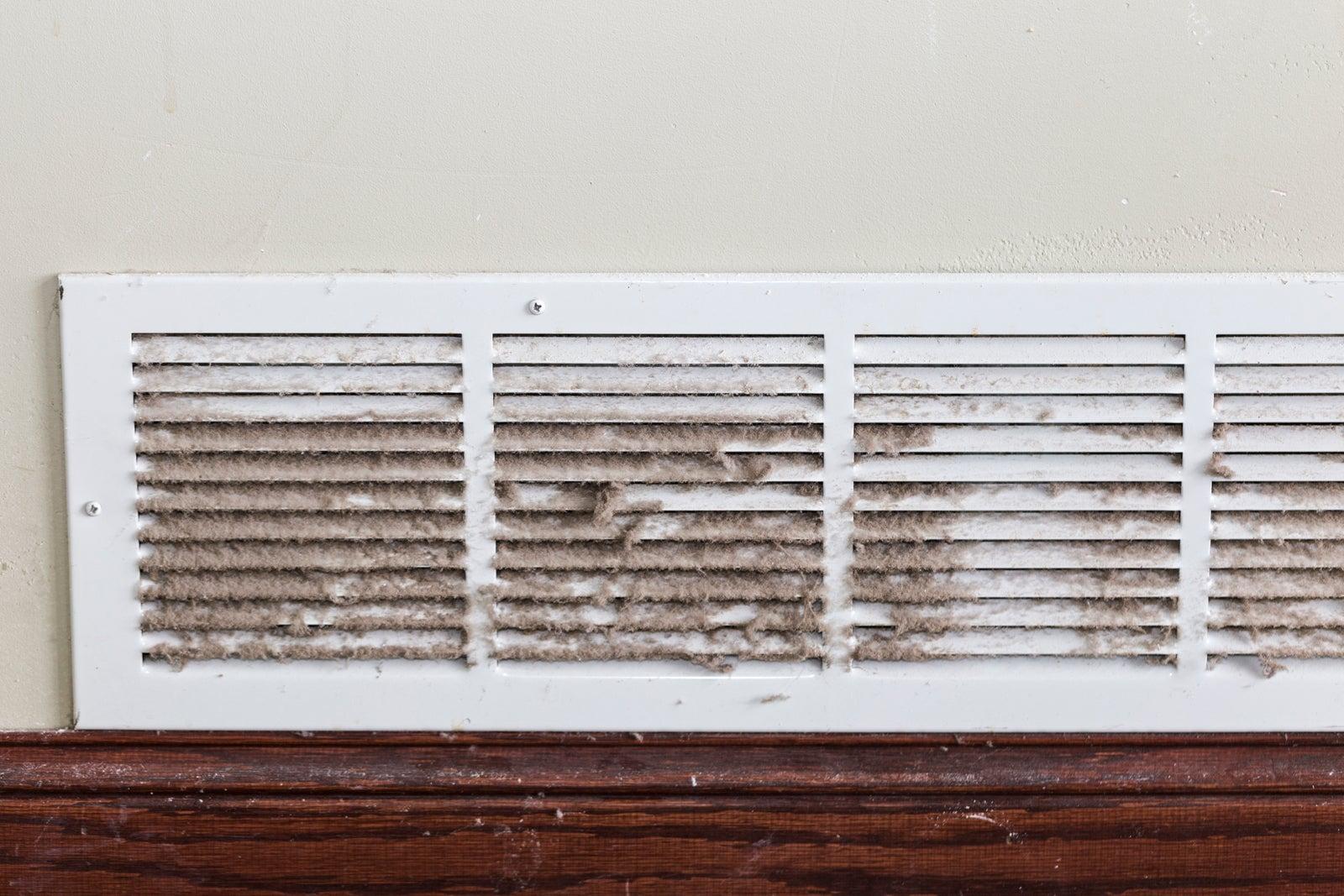
Quick answer: The most common signs of bad ductwork are a home that stays dusty, dust streaks on the ceiling around your vents, dust blowing out when the system kicks on, rooms that never feel comfortable, loud or whistling vents and an AC that always needs repairs. In Jacksonville, the cause is very often ductwork that was undersized when the house was built.
On this page:
6 signs of bad ductwork
Look for undersized ductwork first
Other ductwork problems that cause the same symptoms
Is it time to have my ductwork checked?
Signs of bad ductwork FAQs
I’d be willing to bet that no one wakes up and declares, "I want to buy ductwork today." What people notice is the problem: the dust that comes back two days after you clean, the bedroom that's always warm, the AC that's been fixed three times this year.
Those problems often trace back to the ducts. Here's what to watch for.
“I can go into just about any house in Jacksonville and find ductwork that's undersized for the system it's connected to.”
— Mike Lombardi, HVAC Install Manager, Fenwick Waychoff's
6 signs of bad ductwork
Bad ductwork can have many causes, from ducts that were undersized when the house was built to leaks, damage or years of built-up dust. Any one of the signs below can also point to a problem with your AC system itself. When you notice two or three of them together, though, the ductwork is a likely culprit.
1. Your home is always dusty
You dust on Saturday and the furniture is coated again by Tuesday. Leaky or dirty ducts pull dust from the attic and wall cavities and blow it right back into your living space.
2. You find dust streaks on the ceiling, particularly around vents
We call these streakers: dark, dusty marks on the ceiling right around the supply vents. They usually mean air is escaping around the boot, where the duct meets the ceiling, and carrying dirt with it.
3. You notice dust blowing out of the vents
If you see a puff of dust when the system turns on, or you find dust collecting on the vent covers, make a note of which vents it's coming from. This likely means that the inside of the duct system is dirty, damaged or pulling in air from places it shouldn't.
4. The rooms in your home are never comfortable
One bedroom is always hot. The upstairs never cools down. The room at the end of the hall feels stuffy no matter where you set the thermostat. When certain rooms aren't getting enough air, the ducts feeding those rooms are a likely suspect.
5. You hear loud or whistling vents
Every time the unit kicks on, you hear a whistle, a rush of air or a sound like the system is struggling. That's usually what's happening: air is being forced through a path that's too small for it.
6. Your AC breaks down repeatedly
Your system isn't that old, but you've had it repaired several times in the last year. Maybe it needed a new blower motor one month and another part the next. Repeated, premature repairs are one of the clearest signs that the system is working too hard, and restricted ductwork is one of the most common reasons.
“When that math is off, no amount of repairs on the AC itself will fix the problem.”
— Mike Lombardi, HVAC Install Manager, Fenwick Waychoff's
Look for undersized ductwork first
Here's something I've learned from years of working in Jacksonville homes: many builders install the lowest-cost duct system the inspector will allow. I can go into just about any house in Jacksonville and find ductwork that's undersized for the system it's connected to.
Think about ductwork airflow like taking a breath. Properly sized ductwork is like breathing through a regular straw, and the air moves easily. Undersized ductwork is like breathing through one of those little coffee stirrers. You can still breathe, but you have to work a lot harder.
Your AC works the same way. When the ducts are too small, the system strains to move air, the rooms at the end of the line don't get enough of it, the vents whistle, and parts like the blower motor wear out long before they should.
Ductwork is one part of our industry that's straight math. The size of each duct run has to match the system and the space it serves. When that math is off, no amount of repairs on the AC itself will fix the problem.
Other ductwork problems that cause the same symptoms
Undersizing isn't the only cause. These issues show up in Northeast Florida homes all the time:
Your ducts are dirty. The return side of every system collects dust, pet hair and dander. Homes with pets or smokers build up faster.
Air is leaking out at the boots. Air escaping where the duct meets the ceiling leads to streakers and wasted cooling.
The ducts are damaged or deteriorating. Older systems can sag, tear or separate, especially in hot attics.
The ductwork is the wrong kind for its location. For example, attic-grade duct installed under a mobile home can be damaged by pests and the elements.
Is it time to have my ductwork checked?
If you recognize two or more of the signs above, it's worth having someone look at the whole system rather than chasing one symptom at a time. A good duct evaluation looks at sizing, condition, airflow and how the ducts are connected to your equipment.
Fall through spring is the best time for ductwork projects in Florida. Once summer hits, attics can reach 140 to 160 degrees, which makes duct replacement much harder and keeps HVAC crews busy with AC repairs and installs. If you've been putting ductwork off, the cooler months are your window.
Bad ductwork? Call Fenwick Waychoff's today
If your home is dusty, uneven, or hard on your AC, our team can tell you whether your ductwork is the reason and what your options are. We've served Jacksonville, Jacksonville Beach, Ponte Vedra Beach, St. Augustine, Orange Park, Fleming Island and the surrounding Northeast Florida communities for over 50 years.
Call 904-217-5694 or schedule your ductwork inspection today.
Signs of bad ductwork FAQs
How do I know if my ductwork is bad?
Look for a home that stays dusty, dust streaks on the ceiling around your vents, dust coming out of the vents, rooms that are always too hot or cold, whistling vents and an AC that needs frequent repairs. Two or more of these together usually mean the ductwork deserves a professional look.
Can bad ductwork damage my air conditioner?
Bad ductwork can absolutely damage your air conditioner. When ductwork is undersized or restricted, your system has to strain to move air, much like breathing through a coffee stirrer instead of a straw. That extra work wears out parts like the blower motor early and can lead to repeated repairs on a system that isn't very old.
Why do I have dust streaks on my ceiling around the vents?
Those streaks usually mean air is leaking around the duct boot, where the duct connects to the ceiling. The escaping air carries dust and leaves dark marks on the ceiling. Sealing the gap around the boot often helps, but it's also worth checking the rest of the duct system for leaks.
Why does my air vent whistle?
A whistling vent usually means air is being forced through a space that's too small, such as undersized ductwork, a restricted duct run or a partially closed damper. In many Jacksonville homes, the ducts were undersized from the day the house was built, so the system struggles every time it turns on.
When is the best time to replace ductwork in Florida?
The best time to replace ductwork in Florida is fall through spring. Florida attics can reach 140 to 160 degrees in summer, which makes duct installation difficult and hard on the materials. Scheduling ductwork replacement between October and April also avoids the summer rush, when HVAC crews are focused on AC repairs and system installs.
Related Articles
What do you need help with today?
Heating
No heat, strange smells, rising bills? We repair and replace heating systems to keep your home reliably warm.
Air Conditioning
AC blowing warm air? Uneven cooling in your rooms? We fix cooling issues fast and keep your system running smoothly all summer.
Plumbing
Our highly trained plumbers handle it all, from leaky faucets to full system installations and repipes.
Electrical
The smartest team in town. You need repair, installations, wiring, inspections, lighting — you name it.