
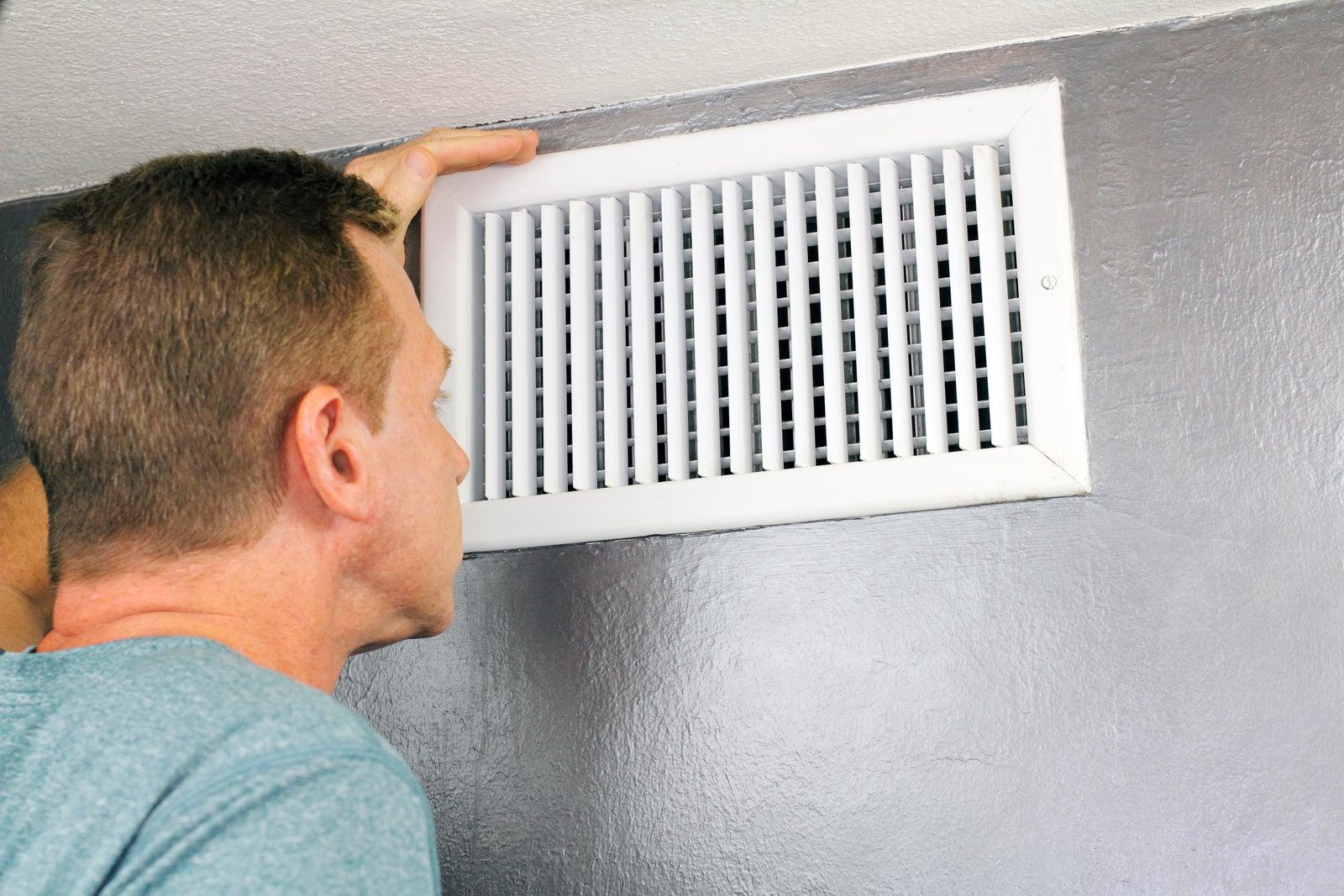
Quick answer: There’s not much a homeowner can safely do to clean ductwork. You can vacuum what you can reach inside the return, seal gaps around ceiling vents, and wipe away dust streaks. Cleaning the ducts themselves takes professional equipment, and about 1 in 5 homes we inspect aren't good candidates for duct cleaning at all.
On this page:
How often should ducts be cleaned?
Can a homeowner clean their own ducts?
What can a professional duct cleaning technician do?
What duct cleaning does (and doesn't) accomplish
Some homes shouldn't have their ducts cleaned
What does duct cleaning cost?
How to clean ductwork FAQs
"How do I clean my ducts?" is one of the most common questions people ask about ductwork. The honest answer is that there isn't much you can safely do on your own, and doing it wrong can make things worse. But there are a few simple things you can do to keep your ducts cleaner and help them last longer, from vacuuming the return to changing your air filter on schedule.
Before deciding how to clean your ducts, it helps to know why you want them cleaned.
Start with the problem
When someone calls and says, "I want my ducts cleaned," my first question is always: why? What's going on in the house?
The answers help me understand what will actually help:
"We have a newborn at home."
"My mother-in-law moved in, and she has bad allergies."
"I keep waking up with a dry, scratchy throat, and my eyes are crusty in the morning."
"There's dust everywhere, and it comes right back after I clean."
Sometimes duct cleaning is the right fix. Sometimes it's one piece of a larger indoor air quality issue. And sometimes the ducts can't, or shouldn't, be cleaned at all. Starting with the problem keeps you from paying for something that won't solve it.
How often should ducts be cleaned?
There's no single duct cleaning schedule that fits every home. So much depends on who lives in the home, whether there are pets or smokers, and how much dust the household creates. Some homes need cleaning far more often than others.
Here's what I can tell you: the return side of every system gets dirty. Even in the cleanest homes, if I pull a return grille down, there's going to be buildup inside. Household dust includes dead skin, along with what dust mites leave behind after they feed on it, plus soil and particles tracked in from outdoors. Every home with people in it has dust.
Some homes build up much faster:
Pets add hair and dander to the dust in your home.
Smoking indoors speeds up buildup in the ducts.
Renovation or construction work sends fine dust into the system.
If someone in the home has allergies or breathing sensitivities, the same buildup causes more trouble.
A smoker with two dogs needs a different answer than a non-smoker who lives alone with no pets. Instead of following a calendar, watch for the signs: dust that won't stay away, dust blowing from vents, streaks on the ceiling, or allergy symptoms that get worse indoors.
“Even in the cleanest homes, if I pull a return grille down, there's going to be buildup inside.”
— Mike Lombardi, HVAC Install Manager, Fenwick Waychoff's
Can a homeowner clean their own ducts?
DIY duct cleaning is mostly limited to what you can reach without going inside the duct system.
Vacuum the return opening
If the return is accessible and there's visible buildup right at the opening, you can remove the grille and vacuum out what you can reach with a shop vac.
Stick to what you can see and reach. Pushing the hose deeper into the ducts knocks dust loose and sends it into the airstream. This dust is then pulled into your air handler and blown back into the house.
Seal gaps around ceiling vents
Dust streaks around your ceiling vents usually mean air is leaking around the boot, where the duct meets the ceiling. If you're handy, you can remove the vent cover and caulk the gap between the boot and the ceiling to stop the leak.
Once the gap is sealed, a light brush and a shop vac can clear the dust off the ceiling. Be careful if you have popcorn ceilings, which are common in Jacksonville. In homes built before the mid-1980s, popcorn texture can contain asbestos, so don't brush or scrape it until it's been tested. Scrubbing too hard knocks the texture down and creates a new problem.
Change your air filter
Your air filter is the first line of defense for your ducts. Keeping it fresh slows down how quickly dust builds up in the system.
What can a professional duct cleaning technician do?
Cleaning ducts takes equipment most homeowners don't have. We use two different processes to clean the duct runs themselves, and the right one depends on the type of ductwork in your home.
Brush cleaning
Brush systems use a rotating brush on a long cable, a bit like a mechanical toothbrush, that's fed through each duct to scrub the inside and knock debris loose.
Brushes work very well on metal ductwork, which is common in colder parts of the country. In the South, most homes have flexible duct. A brush can clean flex duct if the crew has the right size brush and the right bristles.
Abatement cleaning
At Fenwick Waychoff's, we use an abatement machine. Think of it as a touch-free car wash for your ducts. It is the method we trust for the flexible duct in most Florida homes, because it cleans every duct run without putting the inner liner at risk.
We connect a large vacuum to your air handler or furnace, then send compressed air and wands through each duct run. The air loosens the debris, and the vacuum pulls it out of the system. Nothing scrubs the duct, so there's far less risk of tearing the lining or scratching anything, and it's extremely effective.
What duct cleaning does (and doesn’t) accomplish
Duct cleaning removes particulates, the stuff that triggers allergies: dust, dander, and pollen. A simple rule of thumb: if a regular vacuum can pick it up off your floor, duct cleaning can pull it out of your ducts.
Duct cleaning won't remove germs or viruses. You can't vacuum those out of the air. That's where air purification and UV sanitation can help.
“In my experience, 20% of the homes we look at aren't good candidates for duct cleaning.”
— Mike Lombardi, HVAC Install Manager, Fenwick Waychoff's
Some homes shouldn’t have their ducts cleaned
In my experience, 20% of the homes we look at aren't good candidates for duct cleaning. Cleaning them would do more harm than good.
These are the most common reasons:
Your metal ducts are old and falling apart. Disturbing them can open up new leaks and failures.
Your ducts are made of duct board. Duct board is made from fiberglass, and cleaning it can release fiberglass particles into the air you breathe.
We can't physically reach the ducts. If ducts run between floors or behind finished ceilings, any damage during cleaning can't be repaired without opening the ceiling or floor. If we can't fix it, we don't want to touch it.
You live in a condo, multifamily building, or mobile home. Access is often limited, and mobile homes in particular have floor vents and ductwork under the home that bring their own challenges.
If your home falls into one of these groups, your options are to live with the ducts you have or replace them. A good technician will tell you that up front instead of selling you a cleaning that won't help.
What does duct cleaning cost?
With financing, professional duct cleaning can cost as little as $12 a month. If your ductwork needs to be replaced, monthly payments typically run $100 to $200. The right answer for your home — cleaning or replacing your ductwork — depends on the condition of your system, the type of ductwork, how accessible it is, and whether cleaning is safe for your home.
One more note on timing: fall through spring is duct season in Florida. Summer attic heat makes duct replacement difficult, so the cooler months are the best time to get this work done.
Fenwick Waychoff’s is standing by to clean ducts in Florida
Before you take a shop vac to your return or book the cheapest cleaning you can find, find out whether duct cleaning is right for your home. Our team will tell you what's going on, what will help, and what won't. We've served Jacksonville, Jacksonville Beach, Ponte Vedra Beach, St. Augustine, Orange Park, Fleming Island and the surrounding Northeast Florida communities for nearly 60 years.
Call 904-217-5694 or schedule your ductwork inspection today.
How to clean ductwork FAQs
Can I clean my air ducts myself?
You can only do part of the job yourself. You can vacuum visible buildup at the return opening, seal gaps around ceiling vents, and change your air filter. Cleaning the duct runs takes professional equipment. Reaching deep into ducts with a shop vac mostly knocks debris loose and sends it back through your system.
How often should air ducts be cleaned?
There's no set schedule for ductwork cleaning. It depends on your household. Homes with pets, smokers, recent construction, or allergy sufferers build up dust faster than others. Instead of following a calendar, watch for persistent dust, dust blowing from vents, ceiling streaks, or allergy symptoms that get worse indoors.
Is duct cleaning worth it?
For homes that are good candidates, duct cleaning is usually worth it. Duct cleaning removes dust, dander, and pollen, which can help with allergies and household dust. Cleaner ducts also mean less dust settling on your furniture and less debris getting pulled into your air handler.
Can duct cleaning damage my ducts?
The fastest way to damage your ducts is to try to clean them yourself. A brush that's the wrong size or has the wrong bristles can tear flexible duct. That's why Fenwick Waychoff's uses an abatement machine, which cleans with compressed air and suction instead of scrubbing, so the duct lining isn't scrubbed.
Does duct cleaning remove germs and viruses?
Duct cleaning removes particulates like dust, dander, and pollen. It doesn't remove germs or viruses from the air. For that, air purification and UV sanitation systems are the better tools, and they work well alongside duct cleaning to keep the system cleaner longer.
Related Articles
What do you need help with today?
Heating
No heat, strange smells, rising bills? We repair and replace heating systems to keep your home reliably warm.
Air Conditioning
AC blowing warm air? Uneven cooling in your rooms? We fix cooling issues fast and keep your system running smoothly all summer.
Plumbing
Our highly trained plumbers handle it all, from leaky faucets to full system installations and repipes.
Electrical
The smartest team in town. You need repair, installations, wiring, inspections, lighting — you name it.