
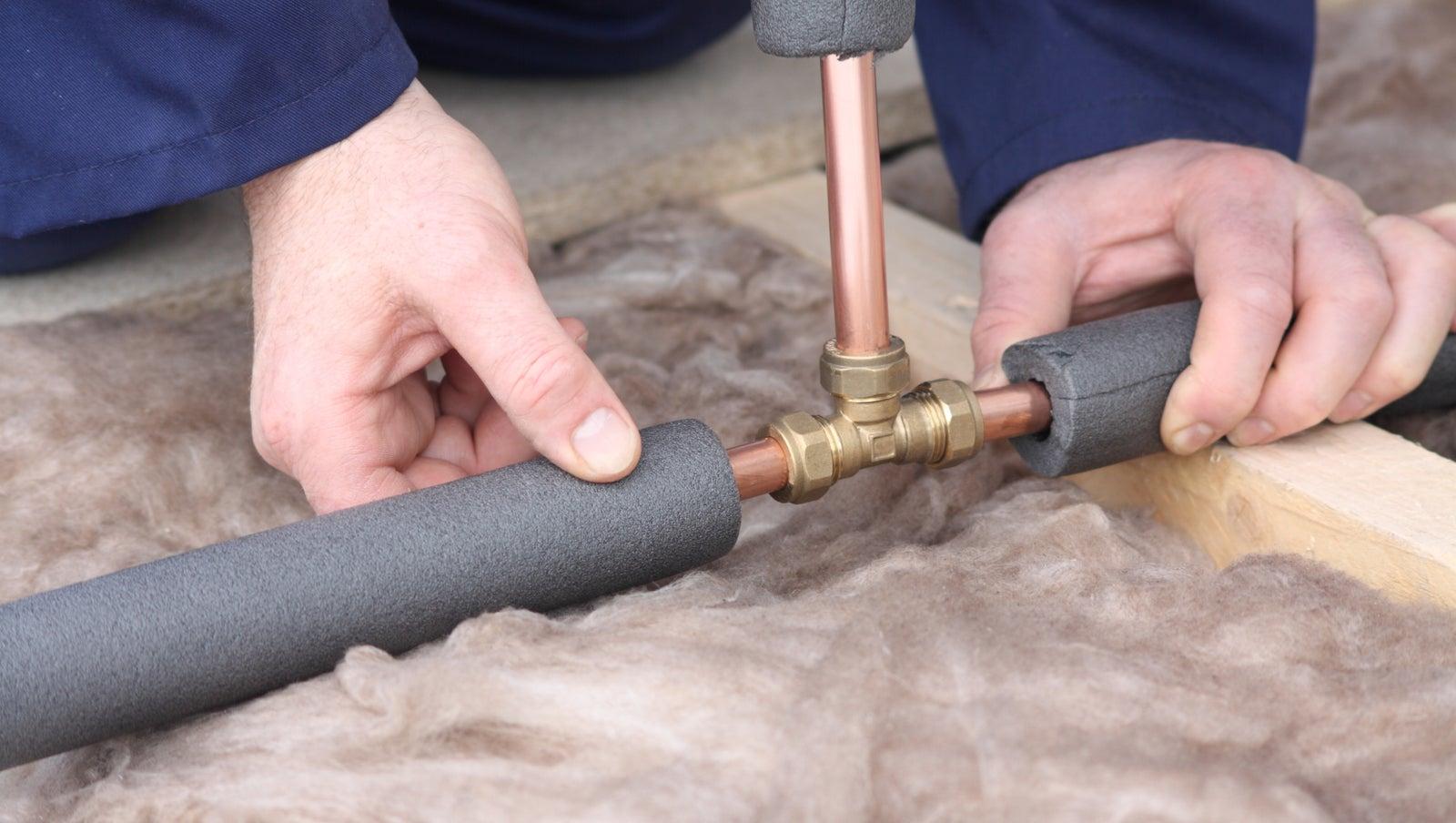
Quick answer: There are six main types of copper pipe. Types K, L, and M carry pressurized water and differ by wall thickness: K is the thickest, L is mid-weight, and M is the thinnest. DWV copper is for drains and vents, ACR tubing carries refrigerant in air conditioners, and medical gas tubing is used in healthcare. Most homes use Type L or Type M for water lines.
On this page:
What is copper pipe?
Pros and cons
Types of copper pipe
Type L vs. Type M
What the colors mean
How to tell what you have
How copper is joined
Is it safe to drink?
How long it lasts
Copper vs. PEX vs. CPVC
Signs of failure
Maintenance
DIY or pro
Repair or repipe
What it costs
FAQs
Copper has carried drinking water into American homes for generations, and there's a good chance it's running through your walls right now. But copper pipe isn't one product. The type in your home affects where it can be used, how well it holds up, and what to do when it starts to leak.
This guide explains the types of copper pipe, how to tell which one you have, and when it's time to repair or repipe. If you've already found a leak, Fenwick Waychoff's provides 24/7 plumbing repair across Jacksonville and Northeast Florida. Call 904-217-5694.
What Is Copper Pipe? (Hard vs. Soft Copper)
Copper pipe, also called copper tube, is metal tubing used to carry water, refrigerant, and gases in homes and buildings. It comes in two tempers, or hardness levels:
Hard (drawn) copper is rigid and sold in straight lengths. It needs a fitting at every turn and is the most common choice for water lines inside walls.
Soft (annealed) copper has been heat-treated so it bends. It's sold in coils and can snake around obstacles with fewer joints, which is why it's used for buried water service lines and air conditioner refrigerant lines.
Copper water tube is sold by nominal size, a trade name rather than an exact measurement. The actual outside diameter is 1/8 inch larger than the nominal size, so “1/2-inch” copper measures 5/8 inch across the outside.
Pros and Cons of Copper Pipe
Copper has a long track record, but it isn't the right fit for every home or budget.
Pros | Cons |
Long track record in residential plumbing | Higher material cost than PEX or CPVC, and copper prices move with the metals market |
Tolerates heat and sunlight, so it can be used where some plastics can't | Installation takes soldering or specialized fittings |
Rigid lines hold their shape, and copper won't burn | Can develop pinhole leaks when water chemistry is aggressive |
Fully recyclable | Small amounts of copper can dissolve into water that sits in the pipes |
Types of Copper Pipe at a Glance
The types of copper pipe used in U.S. homes are defined by industry standards, mainly ASTM B88 for water tube. Each type has a colored marking printed along its length that identifies it.
Type | Marking color | Wall | Standard | Common uses |
K | Green | Thickest | ASTM B88 | Underground water service lines, mains, fire protection |
L | Blue | Medium | ASTM B88 | Interior water lines, water service, hydronic heating |
M | Red | Thinnest pressure-rated | ASTM B88 | Interior water lines where code allows |
DWV | Yellow | Thin; not pressure-rated | ASTM B306 | Drain, waste, and vent lines |
ACR | Blue | Sized by outside diameter | ASTM B280 | Air conditioning and refrigeration lines |
Medical gas | Green (K) or blue (L) | K or L wall | ASTM B819 | Oxygen and medical gas systems |
Type K Copper Pipe
Type K copper pipe has the thickest walls of the common water tube types, about 0.065 inch on 3/4-inch pipe. It comes in rigid lengths and in soft coils of 60 or 100 feet.
That heavy wall makes Type K the standard for underground water service lines, the pipe that runs from the water meter to your house, as well as for mains and fire protection. Because it's usually buried, most homeowners never see their Type K line. It's also the most expensive of the three water tube types.
Type L Copper Pipe
Type L copper pipe has a medium wall, about 0.045 inch on 3/4-inch pipe. It's sold in both rigid lengths and coils, which makes it the most versatile type.
Type L is the most common all-around choice for interior water supply lines. It's also used for water service lines, hydronic heating, and some HVAC work.
Type M Copper Pipe
Type M copper pipe has the thinnest wall of the pressure-rated types, about 0.032 inch on 3/4-inch pipe. It's sold only in rigid lengths.
Type M is lighter and less expensive than Type L, and it's used for interior water lines in many homes where local plumbing code allows it. Many local codes require Type K or L for buried service lines, so check before using Type M underground.
DWV Copper Pipe
DWV (drain, waste, and vent) copper pipe carries wastewater out of your home and vents sewer gases through the roof. It's marked in yellow and isn't rated for pressurized water, so it can never be used for supply lines.
You're most likely to find copper DWV in older homes. New construction typically uses plastic drain pipe instead.
ACR Copper Tubing (Your AC's Refrigerant Lines)
ACR (air conditioning and refrigeration) copper tubing carries refrigerant between your outdoor condenser and indoor air handler. Unlike water tube, ACR tubing is sized by its actual outside diameter. It's cleaned and capped at the factory to keep moisture and debris out of the refrigerant system.
Soft ACR copper is the most common material for the refrigerant line set on split-system air conditioners and heat pumps. If your line set is damaged or leaking refrigerant, Fenwick Waychoff's AC repair technicians can diagnose the problem.
Type L vs. Type M Copper: What's the Difference?
The difference between Type L and Type M copper is wall thickness. Type L has a thicker wall, so it handles higher pressure, holds up longer to wear, and comes in both rigid lengths and coils. Type M is thinner, lighter, and less expensive, and it's sold only in rigid lengths for interior water lines where code allows.
Feature | Type L | Type M |
Marking color | Blue | Red |
Wall thickness (3/4-inch pipe) | About 0.045 inch | About 0.032 inch |
Forms available | Rigid lengths and coils | Rigid lengths only |
Typical use | Interior water lines, water service, hydronic heating | Interior water lines where code allows |
Underground use | Yes | Allowed by some codes; many require Type K or L |
Cost | Higher | Lower |
If you're replacing a section of pipe, a plumber will match the existing type or upgrade to a heavier wall, and will check what your local code requires.
What Do the Colors on Copper Pipe Mean?
The colored printing on copper pipe tells you its type, and therefore its wall thickness: green for Type K, blue for Type L, red for Type M, and yellow for DWV. The printing usually also shows the type letter and manufacturer information.
A common myth is that red copper is for hot water and blue is for cold. That isn't true. Types K, L, and M can all carry hot or cold water.
How to Tell What Type of Copper Pipe You Have
You can often identify your pipe in a few minutes:
Find exposed pipe. Look near the water heater, under sinks, in the garage or attic, and where the main line enters the house.
Look for colored printing. A green, blue, red, or yellow line of text along the pipe identifies Type K, L, M, or DWV. Wipe the pipe clean, since the ink can fade.
Check for stamped letters. The type letter is often stamped into the pipe at intervals, so you may still find it after the ink has worn off.
Compare the wall at a cut end. If you can see an open end, a thicker wall points to Type L or K, a thinner one to Type M.
Note whether it's rigid or coiled. Type M only comes in rigid lengths. Soft, bendable copper running underground or to your AC is likely Type K, Type L, or ACR tubing.
Not sure it's copper at all? Copper is reddish-brown, may have a green or blue-green patina, and a magnet won't stick to it. Galvanized steel is gray with threaded fittings, and a magnet will stick. PEX is flexible plastic, usually red, blue, or white. CPVC is rigid, cream-colored plastic.
How Copper Pipe Is Joined (and Connected to Other Materials)
Copper pipe can be joined several ways:
Soldering (sweating): heating a fitting and drawing solder into the joint. It's the most common method for water lines.
Brazing: a higher-temperature version of soldering, common on AC refrigerant lines.
Press fittings: a pressing tool crimps a fitting with a built-in seal onto the pipe, with no open flame.
Compression fittings: a nut and ring tighten onto the pipe. They're common on shutoff valves under sinks and toilets.
Flare fittings: the pipe end is flared to seal against the fitting. This works only with soft copper.
Push-to-connect fittings: fittings that grip the pipe when pushed on, often used for quick repairs.
Copper can be connected to PEX or CPVC with transition fittings. Connecting copper to galvanized steel requires a dielectric union to prevent galvanic corrosion between the two metals.
If your home was plumbed before 1988, its copper joints may contain lead solder. The 1986 Safe Drinking Water Act amendments require lead-free solder and flux, with no more than 0.2% lead, in drinking water plumbing, according to the U.S. Environmental Protection Agency. States had until June 1988 to enforce the ban, under federal law. If you're concerned, have your water tested.
Are Copper Pipes Safe for Drinking Water?
Yes. Copper pipes are widely used for drinking water. Small amounts of copper can dissolve into water, though, especially when water sits in the pipes for several hours or is corrosive. The action level for copper in drinking water is 1.3 milligrams per liter, and short-term exposure above that level can cause gastrointestinal distress, according to the U.S. Environmental Protection Agency.
A few simple habits help:
Run the cold tap for about a minute when water has been sitting for several hours.
Use cold water, not hot, for drinking and cooking.
Have your water tested if you notice blue-green stains on fixtures or a metallic taste.
Fenwick Waychoff's offers water testing and water treatment to help you understand and correct your home's water chemistry.
How Long Do Copper Pipes Last?
There's no single lifespan for copper pipe. InterNACHI's Florida home life expectancy chart lists copper water lines at 50 years in one entry and 70 years in another; the real answer depends on conditions inside your pipes:
Water chemistry. Acidic water, high chlorine levels, and some groundwater conditions can corrode copper faster.
Water velocity and pressure. Undersized pipe or high pressure moves water fast enough to wear away copper's protective inner film.
Installation quality. Excess soldering flux, debris left in the lines, and rough cut ends can start corrosion early.
Pipe type. Under the same conditions, a thicker wall takes longer to corrode through.
A leak in fairly new copper often points to an installation or water chemistry problem rather than worn-out pipe. If your home's copper is decades old and you're seeing repeat leaks, have the whole system evaluated.
Copper vs. PEX vs. CPVC: Which Is Right for Your Home?
Copper isn't the only option for water lines. Here's how it compares with the two most common plastic alternatives.
Feature | Copper | PEX | CPVC |
Material | Metal | Flexible plastic | Rigid plastic |
How it's joined | Soldered, pressed, or compression fittings | Crimp or expansion fittings; flexible runs need fewer joints | Solvent-welded (glued) fittings |
Heat and sunlight | Tolerates both | Must be protected from sunlight | Rated for hot and cold water; needs UV protection outdoors unless rated for it |
Relative cost | Highest | Typically lowest | Typically lower than copper |
Watch out for | Pinhole leaks in aggressive water | Can't be exposed to sunlight | Can become brittle with age |
PEX is a popular choice for repiping because its flexible runs need fewer fittings and less wall opening. Copper remains a strong choice where durability and heat tolerance matter most. A licensed plumber can help you weigh the options for your home.
Signs Your Copper Pipes Are Failing
Watch for these warning signs:
Pinhole leaks or small drips along a pipe or at a joint
A green or blue-green crust concentrated at a joint
Blue-green stains in sinks, tubs, or toilets
Discolored water or a metallic taste
Water stains on walls or ceilings, damp drywall, or a musty smell
Low water pressure throughout the house
A water bill that jumps without explanation
Found a leak you can't trace? Fenwick Waychoff's water leak detection pinpoints hidden leaks, and our plumbers are available 24/7 with no extra fee for emergency, evening, or weekend service. Call 904-217-5694.
How to Maintain Copper Pipes
A few habits can help your copper last:
Keep water pressure in check. Plumbing codes generally cap household water pressure at 80 psi. A pressure-reducing valve can bring high pressure down.
Inspect exposed pipe once or twice a year for green crust, drips, or stains.
Quiet water hammer. Banging pipes can be fixed with water hammer arrestors.
Skip harsh chemical drain cleaners, which can damage pipes and drain lines.
Insulate exposed lines in attics and garages to reduce condensation.
Test your water if you notice blue-green stains or a metallic taste.
Can You Work on Copper Pipe Yourself?
What is reasonable to do yourself:
Identifying your pipe type.
Checking exposed pipe for leaks and corrosion.
Shutting off the water and installing a temporary repair clamp or push-to-connect coupling on an accessible leak until a plumber can make a permanent fix.
When to call a professional:
Any soldering or brazing, since open flames near framing and insulation are a fire risk.
Leaks inside walls, ceilings, or under a slab.
Recurring pinhole leaks.
Connections to the water heater, the main service line, or a gas line.
Repiping all or part of your home.
Repiping and water service work often require a permit, and a licensed plumber can handle that for you.
Repair or Repipe? How to Decide
A single, accessible leak is usually worth repairing. Widespread corrosion usually isn't. Use this table to weigh the decision, then talk with a plumber about plumbing repair or whole-home repiping.
Repair makes sense when… | Repiping makes sense when… |
You have one leak in an accessible spot | You've had multiple or recurring pinhole leaks |
The rest of the pipe looks clean and sound | Green corrosion or discolored water shows up throughout the house |
The leak came from physical damage or a single bad fitting | Water pressure is low throughout the house |
The system has otherwise been trouble-free | You're remodeling and the walls will already be open |
Why Choose Fenwick Waychoff's for Copper Pipe Repair and Repiping
Since 1969, Fenwick Waychoff's has been a trusted 24/7 home services provider for homeowners across Jacksonville and Northeast Florida. Our licensed plumbers (FL Plumbing Lic. CFC040039) repair copper pipe, find hidden leaks, and repipe homes, and we've earned thousands of five-star Google reviews along the way.
We answer plumbing calls 24/7 with no extra fee for emergency, evening, or weekend service. We offer same-day service with an On-Time Guarantee, backed by expert technicians and our warranties and guarantees. A Comfort360 membership includes 15% off plumbing repairs.
We serve homeowners in Jacksonville, Jacksonville Beach, Orange Park, Fleming Island, St. Augustine, Ponte Vedra Beach, Nocatee, Fernandina Beach, and surrounding communities.
Copper Pipe FAQs
Which type of copper pipe is best for a house?
Type L is the most common all-around choice for interior water lines because its thicker wall holds up well and it comes in both rigid lengths and coils. Type M is also used inside many homes where code allows. Type K is the standard for underground water service lines.
Can copper pipe be used for hot and cold water?
Yes. Types K, L, and M can all carry hot and cold water. The colored marking on the pipe shows its wall thickness, not whether it's meant for hot or cold lines.
Does green on copper pipes mean a leak?
Not always. A thin green patina forms naturally on exposed copper over time. A green or blue-green crust concentrated at one joint, especially with moisture nearby, often signals a slow leak. Wipe the area dry and check it again over the next few days.
Does homeowners insurance cover a pinhole leak?
Many homeowners policies cover sudden, accidental water damage from a leak, such as ruined flooring or drywall. Most don't pay to repair the pipe itself or to fix damage from a slow leak that went unaddressed. Coverage varies, so check your policy and keep photos of the damage and your repair receipts.
Related Articles
What do you need help with today?
Heating
No heat, strange smells, rising bills? We repair and replace heating systems to keep your home reliably warm.
Air Conditioning
AC blowing warm air? Uneven cooling in your rooms? We fix cooling issues fast and keep your system running smoothly all summer.
Plumbing
Our highly trained plumbers handle it all, from leaky faucets to full system installations and repipes.
Electrical
The smartest team in town. You need repair, installations, wiring, inspections, lighting — you name it.