
When it comes to furnaces, it’s important to determine what size you need prior to purchasing a system. In fact, it’s absolutely necessary. A furnace system can make or break your home’s comfort. If you get a furnace that is too big, it won’t heat your home properly, which wastes your hard-earned investment. Get the right furnace, and your home will be cozy and comfortable just in time for the colder season. To help you choose a gas furnace, we have compiled a list of tips to consider when you are comparing models on the Internet.
What’s a British Thermal Unit(BTU)?
BTU stands for British Thermal Unit. This metric is utilized to measure the size of furnaces and heat energy in the HVAC industry. To properly keep your house warm in the winter, it’s important to choose a furnace with a BTU rating that can accommodate your needs. In order to calculate the furnace size you need, you will be required to multiply the square footage of your house by a climate heating indicator. Below is a formula that can be used to determine the BTU rating of your new furnace.
Formula:
Household Square Footage X Climate Zone Heating Factor = Total BTUs That Your Gas Furnace Must Provide to Perform Efficiently. In order to begin this calculation, you must first know the square footage of your home. An easy way to go about this is by multiplying the length times the width of every room in your home. Then, you add them together. For this example, let’s say you have a 1400 square-foot home.
Read More: Gas Furnaces vs Heat Pumps: 4 Primary Parts & Tips
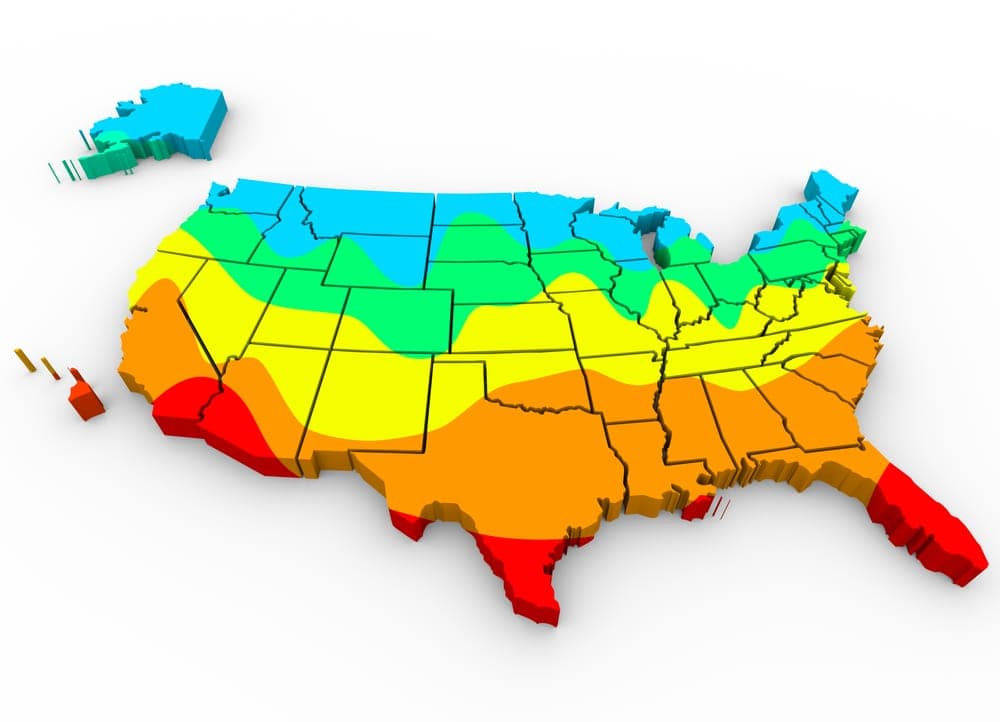
Heating Climate Territories
The next step to determining what size furnace you need is including the heating factor of your climate zone. This part will be fairly easy. Here’s a breakdown of the different Heating Climate Zones based on average air temperatures and weather conditions. Easily locate the territories and discover what number your hometown air typically falls into.
Territory 1 (Hot) - 30 -35 BTUs / Square Foot
Most of Florida
Southern Texas
South Georgia
Territory 3 (Moderate) - 35-40 BTUs / Square Foot
Central Texas
Central Georgia
South Carolina
Most of California
Territory 4 (Moderate) - 45-50 BTUs / Square Foot
Washington State
Southern Michigan
Southern New York
Virginia
North Georgia
Territory 5 ( Cool) - 50-60 BTUs / Square Foot
Most of Washington State
Southern Michigan
Western New York
Most Pennsylvania
Northern California & Coastal
Boston Area
Territory 6 (Cooler) - 55 BTUs / Square Foot
Northeast Washington State
Northern Michigan Peninsula
Central New York North
Southern Wisconsin
Territory 7 (Cold) - 60 BTUs/ Square Foot
Southern Minnesota
Most of Maine
Most of Northern Michigan
Northern Wisconsin
Read More: What Does the U-Shaped Pipe Beneath My Sink Do?
If you are trying to determine how big your furnace needs to be for a newer home with decent insulation, select the lower BTU rating for your climate territory. Do you have an older house with insulation that needs to be updated? Select the higher BTU rating for your territory.
3 Signs Your Furnace is Too Large for Your House
How do you know if your furnace is too large for your home? Take a look below to learn three common signs of an oversized furnace.

Unpleasant Room Temperature
The first tale-tell sign is an unpleasant room temperature. If your furnace is too large for your home, you’ll notice uneven air distribution: hot air blasting from vents in one room, while other vents aren’t blasting. As a result, your home won’t warm up evenly, making it quite uncomfortable to live in. Consult with a licensed technician to determine what size furnace you need to eliminate the hot and cold spots in your house.
Short Heating Cycles
Is your furnace turning off and on constantly? You may be experiencing short heating cycles. Though heating cycles are a normal part of your furnace system, it should not shut on and off too frequently. Factor this in with unpleasant room temperatures, and it’s safe to say your furnace may be too large for your home.
Read More: 6 Types of PVC Plumbing Pipes & Benefits
High Utility Bills & Operating Costs
Take a look at your monthly utility bill. Have you noticed a spike in cost even though you haven’t done any unusual heating activities? This could be an indicator of an oversized furnace system. Since a furnace system uses a lot of energy to turn on and heat your home, if your furnace is too big, it could be using more energy at a greater frequency. As a result, you’ll start to see the outcome of this on your energy bill. If this is the case, you may need to purchase a different size furnace for your home.
6 Factors to Consider Prior to Choosing a Furnace Size
Here’s a look at other factions that you should consider when selecting the right furnace for your home.
Home’s age
Home’s size
Location of home
Condition of insulation
Number of windows in home
Energy efficiency rating of furnace
Furnace Repair, Installation, and Replacement Services
Don’t let a small furnace repair issue turn into a bigger, more costly problem. Whether you have a gas or electric furnace, the heating contractors at Fenwick Home Services are equipped with the knowledge and skills necessary to perform a furnace repair or tune-up service in your home. Our team also provides other heating and cooling services such as heat pump repair, air conditioning maintenance, and furnace installation. Give our team of licensed contractors a call by phone at (904) 217-5694 to become familiar with the latest furnaces. No matter what you need, our team is on-call and ready to bring heat and warmth to your home.
Need Help? Our Staff Of Certified Technicians Offers Furnace & Air Conditioning Repair Services in St. Johns, FL
Related Articles
What do you need help with today?
Heating
No heat, strange smells, rising bills? We repair and replace heating systems to keep your home reliably warm.
Air Conditioning
AC blowing warm air? Uneven cooling in your rooms? We fix cooling issues fast and keep your system running smoothly all summer.
Plumbing
Our highly trained plumbers handle it all, from leaky faucets to full system installations and repipes.
Electrical
The smartest team in town. You need repair, installations, wiring, inspections, lighting — you name it.